As the sun sets on March 18, 2026, a profound and rare transformation will sweep across the island of Bali. The bustling streets of Seminyak will fall silent, the vibrant beach clubs of Canggu will go dark, and the only international airport in the world to do so will close its gates. This is Nyepi 2026, the Balinese Day of Silence—a New Year celebration unlike any other on Earth.
For those planning to be on the island in 2026, Nyepi offers a spiritual reset that is increasingly vital in our hyper-connected world. It is a day dedicated to Mulat Sarira the art of inward reflection where the entire island enters a 24-hour period of total stillness.
To truly understand the cycle of Nyepi 2026, you have to look at the “spiritual bookends” of the holiday. The silence of Nyepi is the peak, but the rituals before and after are what make the experience complete.
Here are the most significant traditions surrounding the Day of Silence:
- Before Nyepi: Melasti (The Great Purification)
Usually held 3–4 days before Nyepi, Melasti is the ritual purification of the soul and the world.
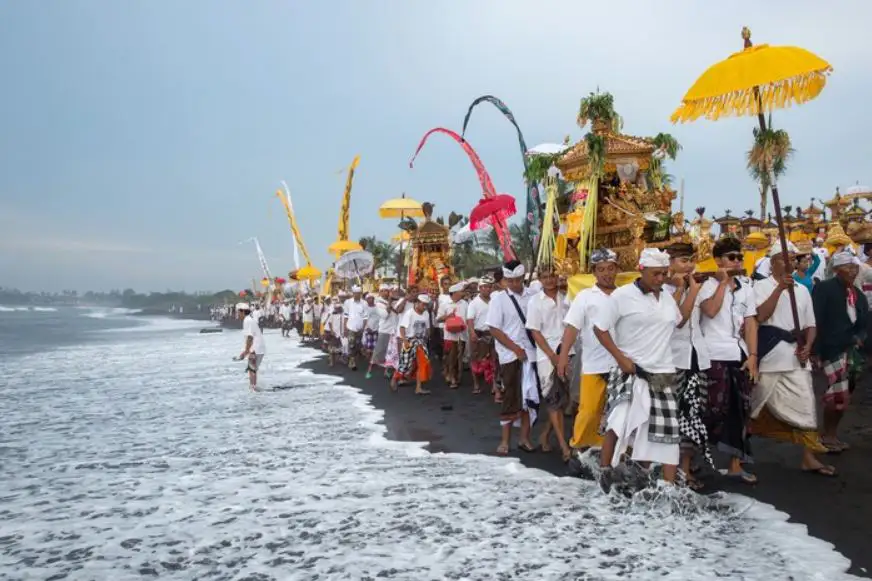
- The Ritual: Villages from all over Bali journey in massive processions toward the sea (or sacred lake sources). They carry sacred heirlooms (Pratima) from their temples to be washed by the holy water of the ocean.
- The Atmosphere: Imagine thousands of Balinese Hindus dressed in traditional white attire, walking in long lines with umbrellas and offerings, accompanied by the hypnotic clanging of the Gamelan.
- The Purpose: It is a symbolic “cleaning” of the universe before the New Year begins, removing the “dirt” of the past year.
- Before Nyepi: Tawur Kesanga (The Day of Sacrifice)
This happens on the eve of Nyepi the famous tradition of Ogoh-Ogoh parade.
- The Ritual: At noon, major crossroads (where spirits are believed to gather) become sites for elaborate offerings (Banten).
- The Purpose: While the Ogoh-Ogoh parade is the “loud” part of the evening, Tawur Kesanga is the formal ritual to appease the lower spirits (Bhuta Kala) so they do not disturb humans during the sacred silence of the following day.
The Rituals of Noise and Fire
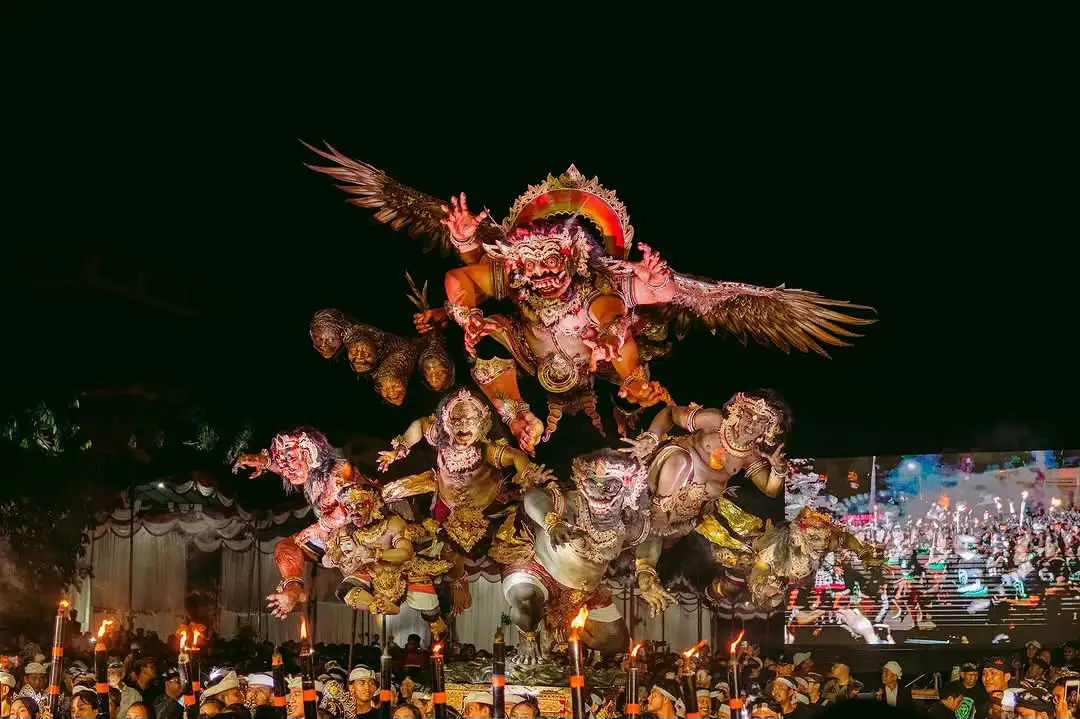
The fascinating thing about Nyepi is the contrast. The day before, Ngrupuk, is a spectacle of controlled chaos. Every village in Bali parades giant, grotesque effigies known as Ogoh-Ogoh. These hand-crafted statues represent demonic spirits and negative energies. As night falls, the air is thick with the sound of traditional gamelan and fire torches, as the island symbolically drives away evil before the silence begins. In 2026, expect even more intricate Ogoh-Ogoh designs as local youth organizations (Sekaa Teruna) continue to push the boundaries of sustainable and recycled materials in their artistry.
The 24 Hours of Stillness

From 6:00 AM on March 19 until 6:00 AM the following day, the “Four Prohibitions” (Catur Brata Penyepian) are strictly enforced:
- Amati Geni: No fire or light (including electricity and internet).
- Amati Karya: No working.
- Amati Lelunganan: No traveling or leaving the house.
- Amati Lelanguan: No entertainment or revelry.
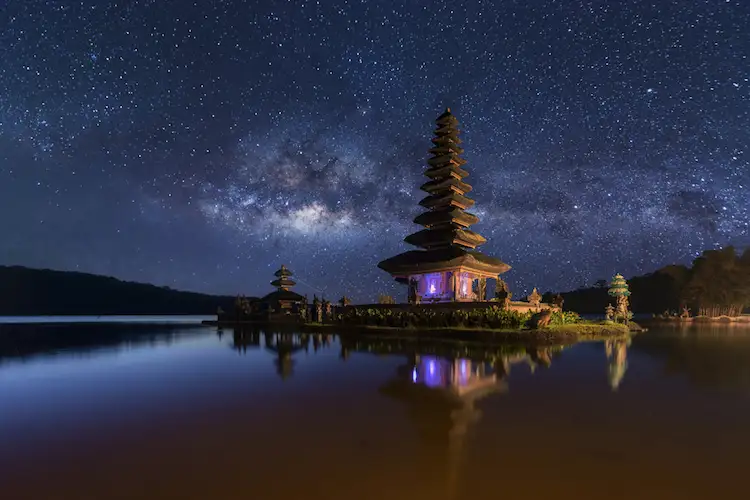
The result is breathtaking. With zero light pollution, the Balinese sky reveals the Milky Way in a brilliance that most people never see in their lifetime. It is a moment where the island breathes, and nature takes center stage.
A Connection to the Eternal
This philosophy of honoring time and nature is deeply embedded in everything we do at our Petrified Wood Gallery. Much like the spirit of Nyepi, our pieces are a celebration of patience and the Earth’s natural cycles. Our furniture—crafted from wood that has spent 20 million years turning into stone—serves as a physical anchor for the stillness you feel during Nyepi.
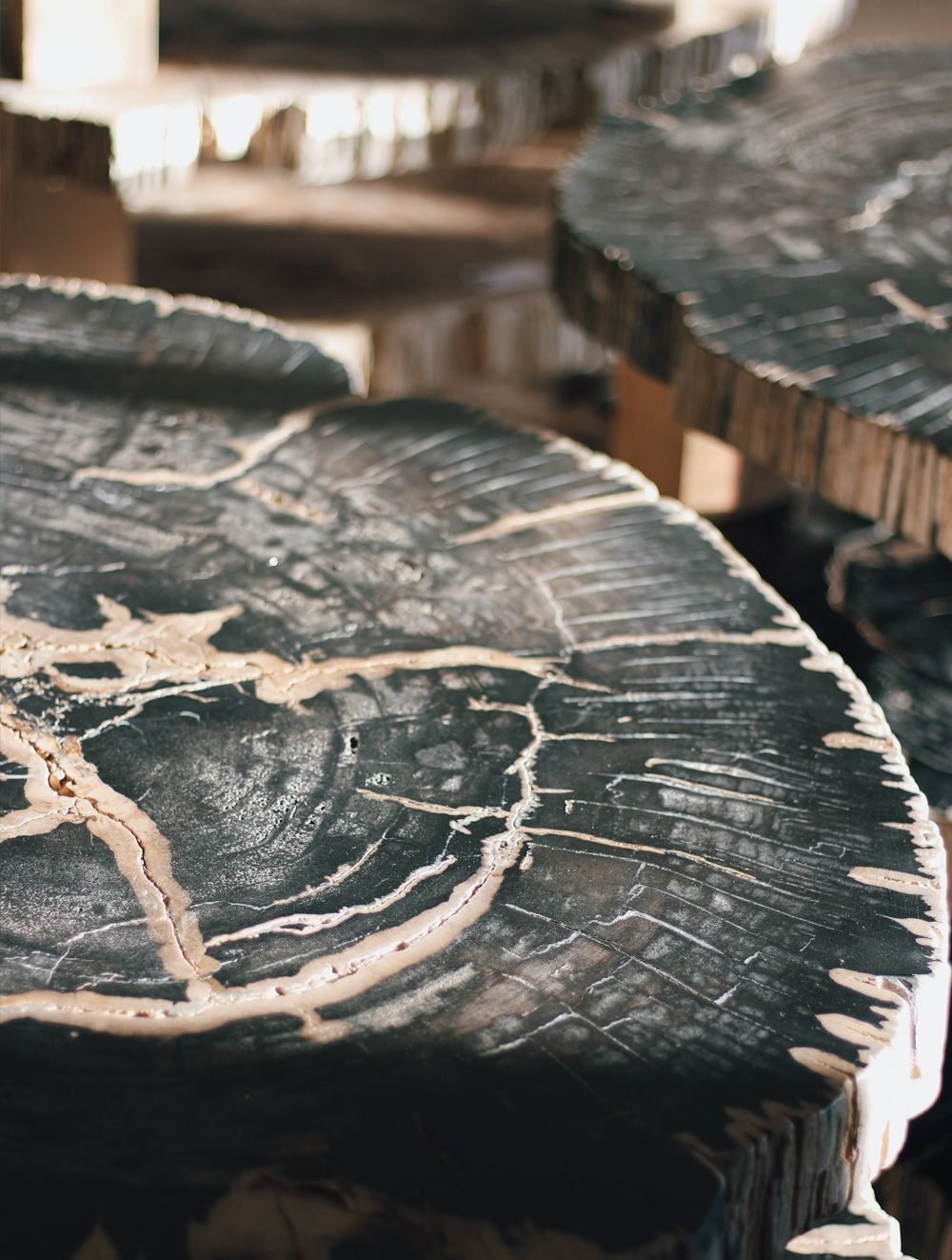
Beyond their ancient beauty, these pieces are believed to carry a profound grounding energy. Because petrified wood was once a living, breathing organism that transformed into a crystal over eons, it is often seen as a stone of “transformation” and “patience.” In the practice of feng shui and crystal healing, petrified wood is used to:
- Calm the Nervous System: Much like the 24 hours of silence in Bali, having petrified wood in your space helps settle a restless mind and provides a sense of security.
- Establish a Rooted Connection: It helps individuals stay grounded during times of change, making it the perfect companion for the Mulat Sarira (self-reflection) journey.
- Invite Longevity: As a symbol of endurance, it is thought to radiate steady, supportive energy that encourages health and stability within the home.
Each side table and onyx slab in our collection is a testament to enduring time, meticulously polished to bring not just a piece of Bali’s ancient soul, but a lasting source of positive, protective energy into your personal sanctuary.
What to Prepare for Nyepi 2026
If you are visiting Bali during this time, preparation is key:
- Stock Up: Shops and pharmacies close completely. Ensure you have enough food and personal supplies for 24 hours.
- Respect the Silence: Even inside your villa or hotel, keep noise to a minimum and lights dimmed or off.
- Embrace the Detox: Use this as a rare opportunity for a digital detox. Bring a physical book, a journal, or a meditation mat.
Beyond the Silence: Ngembak Geni and Omed-Omedan

The day after Nyepi, known as Ngembak Geni, is a day of forgiveness and social reconnection. One of the most unique traditions occurring shortly after is Omed-Omedan (The Kissing Ritual) in the village of Sesetan. It is a vibrant, water-splashing festival where the youth of the village pull and tug in a “battle of the sexes” to ensure good health and a bountiful harvest for the year ahead.
Experiencing Nyepi in 2026 is more than a holiday; it is a once-in-a-lifetime encounter with the sublime. It is a reminder that sometimes, the most powerful thing we can do for our souls is to simply stop, listen, and look within.