
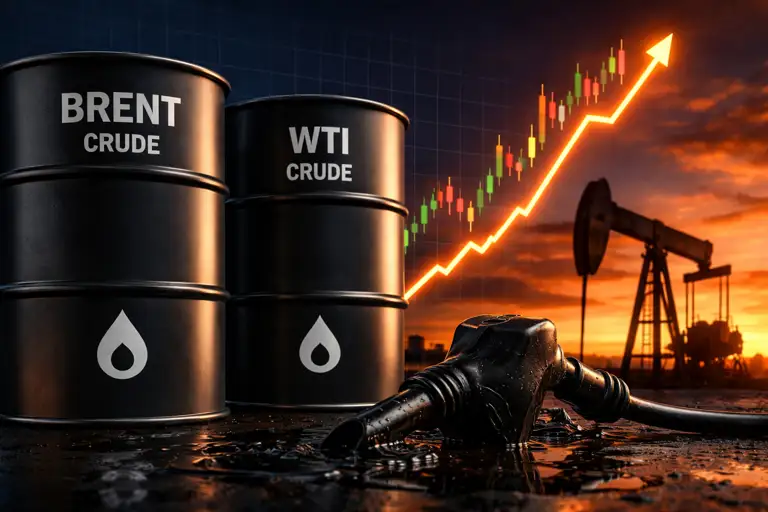
Global oil prices have thrown the energy market into a state of high-octane volatility this March 2026. Following the outbreak of military hostilities between the United States and Iran in late February, Brent crude prices have surged past the $100 per barrel mark for the first time in years, peaking near $120 in mid-March as fears of a prolonged blockade in the Strait of Hormuz become a reality. The primary driver behind this sharp rise in global oil prices is the effective closure of the Strait of Hormuz, a vital maritime chokepoint through which approximately 20% of the world’s oil supply flows daily. With Iran reportedly mining the waters and the US deploying additional carrier strike groups to the region, commercial tanker traffic has come to a near-complete standstill, further complicating logistics and increasing costs for companies buying products from Bali to the USA.
Analysts from the International Energy Agency (IEA) have characterized this as the “largest supply disruption in history,” surpassing even the shocks of the 1970s.
Based on recent reports from March 2026, the escalation of the US-Iran conflict and the subsequent blockade of the Strait of Hormuz have created a tiered crisis affecting nations differently based on their energy dependency and fiscal strength.
Here is the breakdown of the most impacted countries and regions as of late March 2026:
The High-Dependency Importers (Asia-Pacific)
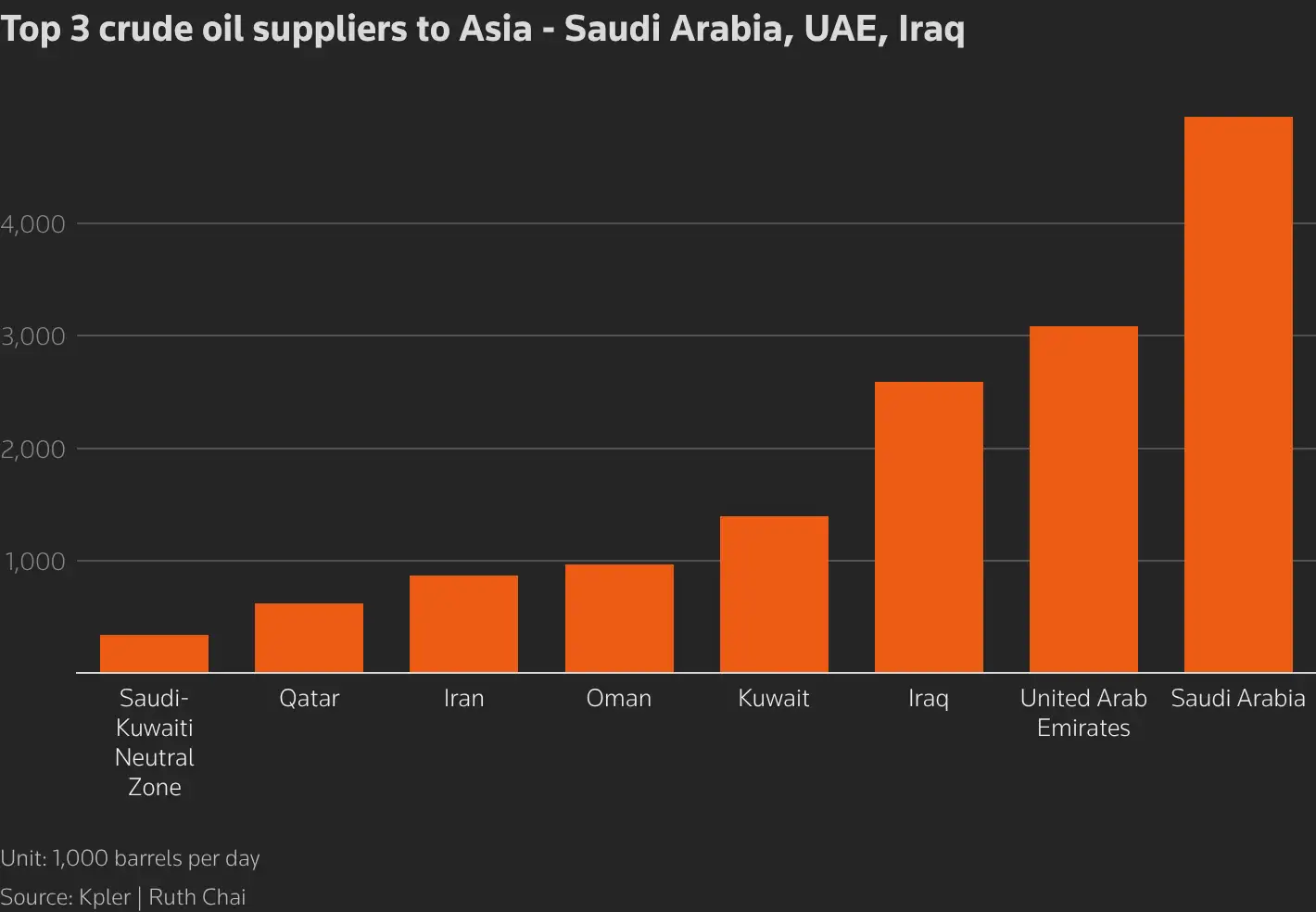
Asia is the hardest-hit region, as it relies on the Persian Gulf for roughly 75% of its oil and 60% of its Liquefied Natural Gas (LNG).
- Singapore: Ranked as the most vulnerable globally. With a fossil fuel dependency of 97.9% and importing 100% of its natural gas, Singapore has seen inflation surge, with the government warning of severe power cost hikes.
- Japan & South Korea: These industrial giants import 95% and 70% of their oil from the Gulf, respectively. While they have strategic reserves (Japan has ~254 days), the prolonged blockade is forcing major manufacturers to scale back production.
- Thailand & Vietnam: Thailand has seen petrol prices rise significantly (up to 28-50% at the pumps), prompting the government to ban oil exports to conserve domestic supply. Vietnam has begun urgent procurement of crude from non-Middle Eastern sources to avoid an industrial standstill.
The Fiscally Fragile (Global South)
Developing nations with limited foreign exchange reserves are facing a “humanitarian and economic emergency.”
- Pakistan, Bangladesh, & Sri Lanka: These countries have the thinnest financial buffers. Bangladesh has introduced fuel rationing as reserves dwindle, while Pakistan is seeing its fragile economy destabilized by the doubled cost of diesel and kerosene.
- Egypt: Highly vulnerable to surging energy costs, Egypt is struggling to maintain subsidies, leading to rapid price increases for transport and food.
- Cambodia: Recorded one of the highest petrol price increases in March, with 95-octane rising by nearly 68% in just two weeks.’
The Industrial Core (Europe)
- Germany & Italy: The European Central Bank (ECB) has warned that these energy-dependent economies are likely entering a technical recession. The spike in gas and oil prices is triggering “stagflation” (high inflation + zero growth), as industrial sectors like chemicals and steel face unviable energy bills.
The current escalation in the Middle East has completely redrawn the map for global aviation and logistics. For businesses trading with the United States, the traditional transit hubs are no longer viable, creating a complex bottleneck for global trade.
The Transit Crisis: Bypassing the Middle East Hubs

For years, Dubai (DXB) served as the primary “bridge” for flights connecting Asia and Africa to the United States. However, due to the 2026 conflict:
- Rerouting & Multi-Stop Transits: US-bound flights that previously enjoyed seamless one-stop transits in Dubai are now forced to bypass the Persian Gulf entirely. Many carriers are rerouting through Singapore, Tokyo, or European hubs like Frankfurt and Paris.
- The “Triple-Jump” Logistics: Because of the increased distance and fuel weight, many heavy cargo planes must now perform multiple technical stops (e.g., Bali → Singapore → Anchorage → New York) to refuel, significantly increasing transit times and landing fees.
- Capacity Crunch: With Dubai’s capacity restricted, the remaining air corridors are severely congested, leading to cargo delays of up to 10–14 days for standard air freight to the USA.
While several global oil giants are reeling from the 2026 Middle East crisis (like the Philippines, which declared a national energy emergency this month), Indonesia has emerged as a rare “oasis of stability” in the energy market. Indonesia also maintained a remarkably stable domestic environment. This is due to three key factors:
- Robust Fiscal Buffer (APBN): The Indonesian Ministry of Finance confirmed in late March that the 2026 State Budget (APBN) remains resilient. The government has opted to absorb the “price shock” through existing subsidies rather than passing the $120/barrel cost to citizens, keeping inflation in check.
- The B40/B50 Biodiesel Mandate:

- Indonesia is uniquely protected by its massive palm oil industry. By accelerating the B50 Biodiesel program (a blend of 50% palm-based biofuel), the country has significantly reduced its dependency on imported Middle Eastern diesel.
- Alternative Sourcing: State energy company Pertamina successfully pivoted its procurement strategy early in the conflict, securing long-term contracts from non-Gulf producers. The Ministry of Energy and Mineral Resources has said that Indonesia imports 20 percent of its crude from the Middle East, its finished fuel products are sourced primarily from Africa, South America, and Southeast Asia. This diversified supply chain, coupled with domestic biodiesel production, shields the nation from immediate shortages during the conflict.
Bridging the Gap: Your Premium Export Partner for Buying Products from Bali to the USA
As global oil prices continue to rise and international logistics become increasingly complex, buying products from Bali to the USA requires a reliable and strategic partner. Our team provides a “Clear Path” for high-end Indonesian goods to reach the US market efficiently, safely, and cost-effectively. We don’t just ship products; we manage the entire ecosystem.
- Buying Agent Expertise: We understand that US buyers are wary of supply chain disruptions. Our Buying Agency acts as a local liaison, handling all negotiations and quality inspections with a transparent, competitive fee that ensures your procurement costs stay low even when oil is high.
- Dedicated Shipping Line: We operate our own shipping company, providing specialized Door-to-Door (D2D) services to every US state. By using trans-Pacific routes that avoid the conflict-ridden Indian Ocean and Middle East hubs, we guarantee your cargo arrives safely at its final US destination.
The World’s Best Petrified Wood From Bali to the USA
Despite the pressure of rising global oil prices, demand for premium and luxury products remains strong especially among buyers buying products from Bali to the USA.
We are proud to be recognized as one of the best petrified wood suppliers in Indonesia. Based in Bali, we transform ancient natural materials into high-end furniture and statement interior pieces. Our collection includes:
-
Luxury Petrified Wood Tables & Stools.

-
-
Museum-grade raw specimens.
-
-
Custom-cut slabs for architectural projects.
By combining the timeless beauty of Bali’s finest petrified wood with our integrated logistics and buying agency, we ensure that your luxury assets reach the US market safely, on time, and at the best possible price point.

-
-
-
Bring the timelessness of Petrified Wood Indonesia to your petrified furniture doorstep
Explore the breathtaking collection of Petrified Wood Bali at Bali Petrified Wood and rest easy knowing your logistics are in the hands of the best in the business.

- Discover the Collection: www.balipetrifiedwood.com
- Coordinate Your Shipment: ARK Logistic Bali – Shipping Petrified Wood Furniture
Visit Bali Petrified Wood today and bring a piece of Earth’s ancient history into your modern life.