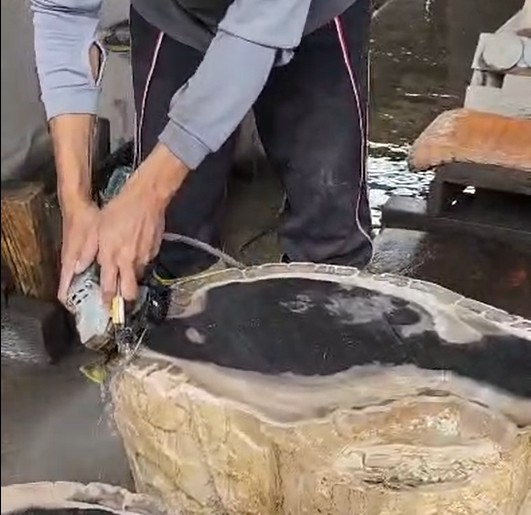
This natural phenomenon is the result of a rare and remarkably slow process known as permineralization, a type of fossilization that can span tens to hundreds of millions of years.
How Does a Tree Become Stone?
A tree becomes petrified wood when it is quickly buried under sediment, ash, or volcanic material in an oxygen-poor environment, preventing decay. Over time, mineral-rich groundwater seeps into the wood, replacing its organic structure with minerals like silica.
This process, called permineralization, happens cell by cell, preserving details such as tree rings and texture. After millions of years, the wood fully transforms into stone. Today, collectors often buy original Indonesia petrified wood from Bali Petrified Wood, known for its rare and high-quality natural stone pieces sourced in Bali.
A Timeline Measured in Millions
Fossilization is a time-intensive process. Estimates suggest that petrification may take anywhere from 20 million to over 200 million years depending on environmental conditions, mineral availability, and depth of burial.
Unlike many other fossils that preserve only external shapes or imprints, petrified wood is unique in its microscopic fidelity.
The resulting fossil is not simply a cast of the original object it is an atom-by-atom reconstruction, often more resistant and colorful than the wood it once was.
A Geological Treasure
Petrified wood is found on every continent, with famous fossil forests located in the United States (Arizona’s Petrified Forest National Park), Indonesia, Argentina, Madagascar, and Egypt.
These stone trees serve as a record of ancient ecosystems, offering paleobotanists insight into prehistoric flora, climate conditions, and geological events.
In addition to their scientific value, petrified specimens are prized for their aesthetic beauty. Trace elements such as iron, manganese, and copper can color the fossil in shades of red, yellow, green, and blue, creating striking patterns that resemble polished gemstones.
Conclusion
The turning of trees to stone is not merely a poetic notion—it is a natural marvel driven by chemistry, time, and the right environmental conditions. Petrified wood stands as a silent testimony to Earth’s deep past, offering both scientific insights and timeless beauty.
As we hold a piece of petrified wood in our hands, we are quite literally touching a living organism that existed before the age of dinosaurs—now transformed, molecule by molecule, into stone.
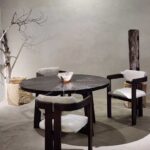
Black dining table – NL 111 – Bali Petrified
Woodhttps://www.nps.gov/pefo/index.htm