

The natural world offers an astonishing array of beautiful materials, and among the most captivating are Onyx and Petrified Wood. While both are often used in decorative arts, jewelry, and architecture, they possess fundamentally different origins, compositions, and visual characteristics. Understanding these distinctions is key to appreciating their unique beauty and selecting the right material for a specific application.
Read More: 3 Concept Tips for Wooden Art: Sculpting Nature into Statement Pieces
Origins and Formation: A Tale of Two Geologies Between Onyx and Petrified Wood
The most significant difference between Onyx and Petrified Wood lies in their geological genesis.
Onyx: The Banded Calcite
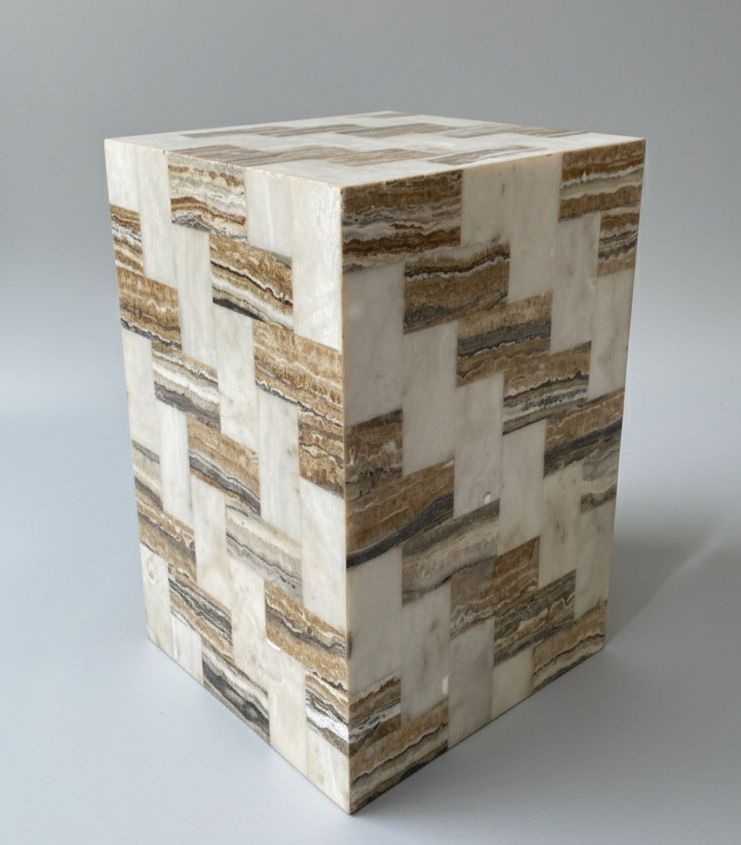
Onyx is a form of calcite (calcium carbonate) or chalcedony (a cryptocrystalline form of silica), characterized by its distinct parallel bands. The name “Onyx” is often used in the decorative stone trade to refer specifically to the banded calcite variety, which is the type frequently used for countertops, wall panels, and translucent features.
-
Formation: Calcite onyx is an igneous or metamorphic rock formed in caves or fissures, similar to stalactites and stalagmites. Mineral-rich groundwater, often supersaturated with calcium carbonate, slowly deposits successive layers over time. The subtle variations in mineral content (like iron oxides, which impart color) and the flow of the water create the characteristic parallel banding. This process can take thousands to millions of years.
Petrified Wood: The Fossilized Forest
Petrified Wood is a type of fossil where the original organic material of a tree has been completely replaced by minerals, most often silica (quartz). The process, known as permineralization, retains the original structure of the wood, down to the cellular level.
-
Formation: The process begins when a tree is rapidly buried by sediment or volcanic ash, which cuts off oxygen and prevents decay. Mineral-rich water then flows through the surrounding material and into the wood’s cellular structure. Over vast stretches of time (millions of years), the minerals precipitate out and replace the organic matter cell by cell, preserving the wood’s structure. The resulting material is essentially a stone replica of the original tree, complete with growth rings and bark texture.
Composition and Hardness Between Onyx and Petrified Wood
Their differing origins lead directly to different physical properties.
-
Onyx: As a calcite-based stone, architectural onyx is generally softer and more porous than granite or quartz. Its hardness on the Mohs scale is typically around 3-4. This makes it susceptible to scratching and etching from acids.
-
-
Organic Texture: It retains the distinct, recognizable features of wood, including knot holes, growth rings, and bark.
-
Color Palette: The colors are derived from the trace minerals present during the permineralization process. Iron oxides produce reds, yellows, and browns; carbon creates black; and copper can lead to blues and greens. This results in incredibly diverse and vibrant patterns, often mimicking the grain and structure of the original tree in vivid hues.
-
Translucency: The most striking feature of calcite onyx is its ability to transmit light. When backlit, it creates a spectacular glow, making it a popular choice for feature walls, bar tops, and custom lighting fixtures.
-
Banding and Veining: The patterns are characterized by smooth, flowing, parallel lines, sometimes appearing as swirling clouds or distinct, colorful stripes. Common colors include white, green, yellow, honey, and reddish-browns.
Petrified Wood: Since the organic material is replaced by quartz (silica), Petrified Wood is significantly harder and more durable. Quartz has a Mohs hardness of 7. This makes it highly resistant to scratching, comparable to granite.
Appearance and Aesthetic Value Between Onyx and Petrified Wood
While both are visually stunning, their aesthetic appeals are distinct.
The Look of Onyx
Onyx is best known for two key features:
The Look of Petrified Wood
Petrified Wood offers a unique blend of geological and biological beauty:
-
Practical Applications Between Onyx and Petrified Wood
Due to their different hardness and light properties, their best uses vary.
-
Onyx: Its spectacular translucency makes it ideal for decorative, low-traffic applications where its beauty can be illuminated. This includes indoor wall cladding, fireplace surrounds, vanity tops, and custom furniture. However, due to its softness, it requires more care than harder stones and is generally not recommended for high-traffic kitchen countertops.
-
Petrified Wood: Given its hardness, it is highly versatile. It is extensively used to create unique statement pieces like tables (often with a polished slab as the top), sculptures, flooring, and decorative bowls. Smaller pieces are frequently polished and cut for jewelry, showcasing the preserved cellular patterns. Its durability makes it suitable for both indoor and outdoor use.
Onyx and Petrified Wood are both magnificent products of geological processes, yet they tell entirely different stories. Onyx is a story of mineral deposits and flowing water, culminating in a soft, translucent stone renowned for its light-transmitting qualities. Petrified Wood, conversely, is a narrative of ancient biology frozen in time, resulting in a hard, durable fossil that perfectly marries the texture of wood with the permanence of stone.
-
Procuring materials of this caliber requires more than a simple transaction; it requires expert curation. At Bali Petrified Wood, we operate at the intersection of geology and design.
As an entity recognized by JIA Curated, we ensure that every specimen, from the massive trunk-sections to the intricate furniture pieces, meets the exacting standards of the world’s leading architects. In collaboration with ARK Logistic Bali, we manage the specialized logistics required to move these heavy, high-value items across the globe, ensuring they arrive at your project site with their history and integrity intact.
-
-