Petrified Wood is the result of millions of years of fossilization, where the organic material of the wood has been entirely replaced by minerals. This process leaves it as hard and heavy as stone, yet it miraculously retains the intricate details of the original wood grain making it one of the most unique materials used in petrified wood furniture today.
More than just a building material, Petrified Wood is a piece of geological history offering unique beauty, exceptional durability, and most importantly, high ergonomic and aesthetic value. It is widely used in natural stone furniture and unique stone furniture, enhancing both interior and exterior design for homes, cafes, and hotels with a luxurious and timeless appeal.
The Superiority of Petrified Wood from an Ergonomic and Aesthetic Perspective
In a design context, ergonomics is not just about physical comfort, but also psychological well-being how an object interacts with the user and the environment. This is why Petrified Wood plays an important role in ergonomic furniture design, combining durability with sensory and visual comfort.
1. Maximum Durability (Functional Ergonomics)
As a material that has been transformed into quartz (silica), Petrified Wood boasts strength comparable to natural stone or marble, making it a premium choice in natural stone furniture.
Longevity: The material is virtually immune to weather, scratches, or exposure to liquids. This minimizes the need for cumbersome maintenance and replacement an essential factor in ergonomic furniture design for both commercial and residential spaces.
Easy Maintenance: The polished surface only requires routine cleaning, making it a highly practical choice for high-traffic areas like cafes or hotel lobbies.
2. Unique “Organic-Mineral” Aesthetics
Every piece of Petrified Wood is one-of-a-kind. The mineralization process yields distinctive wood ring patterns now decorated with a rich spectrum of colors such as brown, cream, rust-red, gray, and even blue and violet depending on the infiltrating minerals (iron, manganese, copper). This uniqueness is what makes it highly desirable in unique stone furniture collections.
Focal Point: Its natural beauty makes Petrified Wood an instant focal point in any room, lending a luxurious, timeless, and authentic atmosphere.
Nature Connection (Biophilic Interior Design): Integrating this million-year-old fossil into a space is an excellent way to implement biophilic interior design, which connects humans with nature. This approach enhances psychological well-being, reduces stress, and creates a calming environmentan important dimension of modern ergonomic furniture design.
Applications of Petrified Wood in Interior & Exterior Design
Petrified Wood can be processed into various forms, from being left raw and natural (as a decorative element) to being perfectly cut and polished (as functional furniture).
Interior Design for Homes, Cafes, and Hotels
A. Table Slabs
Ergonomic Concept: A supremely dense and stable tabletop surface.
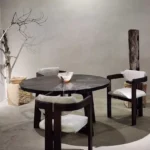
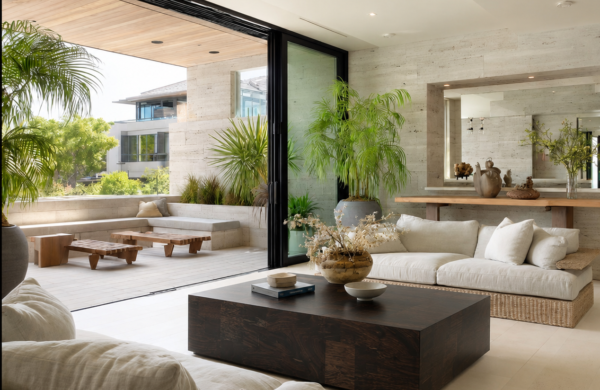
- Dining/Coffee Tables: Large cuts of Petrified Wood are often used as slabs for petrified wood dining table, petrified wood coffee table, or console tables. The smoothly polished surface is comfortable to the touch and easy to clean. The circular cut (from the cross-section of a tree trunk) provides a calming natural aesthetic.

- Photo Caption: Petrified Wood Dinning Table – A Centerpiece of Aesthetics and Durability.
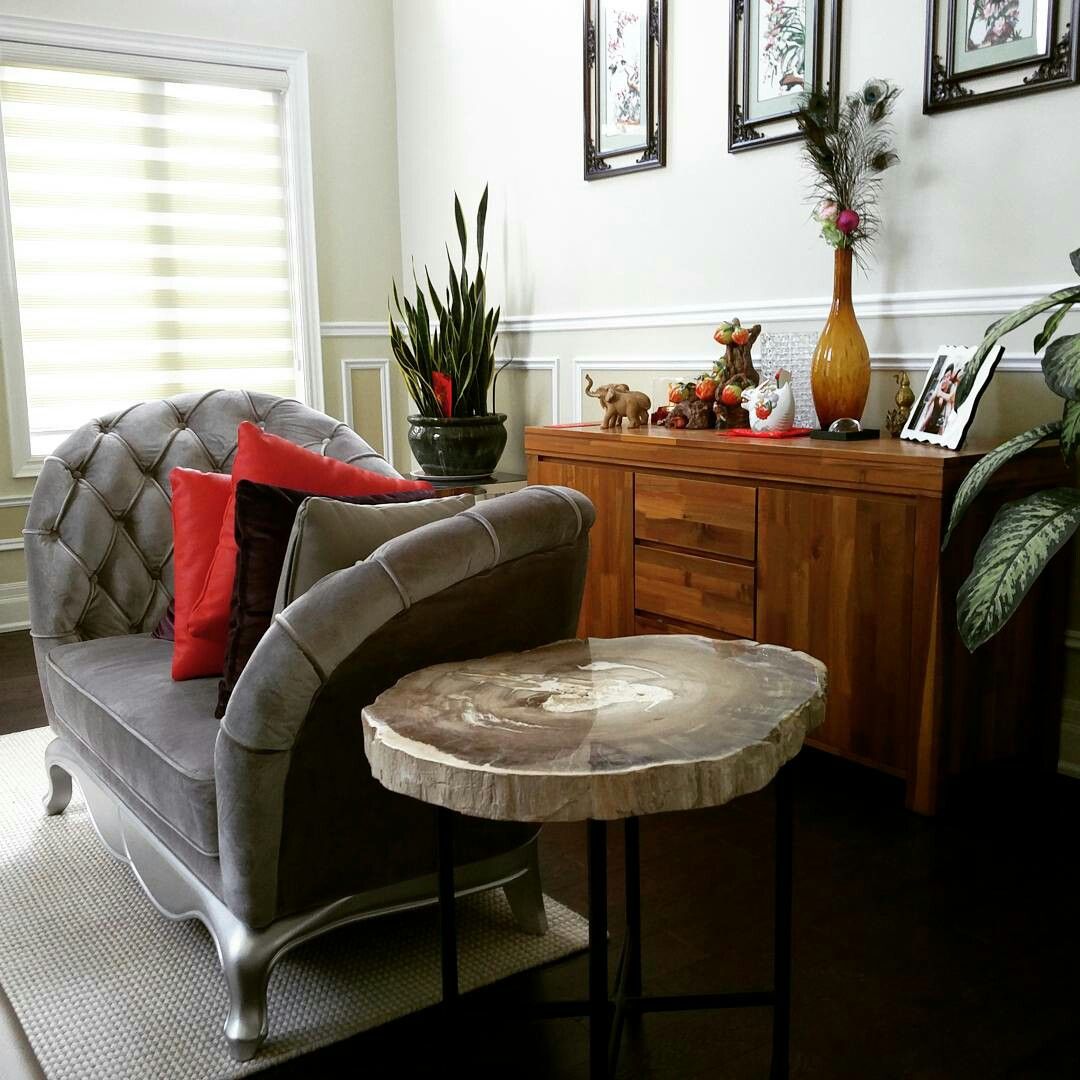
- Photo Caption: Petrified Wood Coffee Table – A Centerpiece of Aesthetics and Durability.
B. Vessel Sinks
Ergonomic Concept: Bringing soothing natural texture to a functional area.
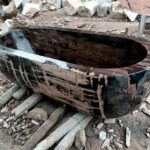
- Bathrooms/Guest Toilets: Using a piece of Petrified Wood carved into a bowl-shaped vessel sink. The interior is typically polished, while the exterior sides are left rough (natural bark) for a dramatic textural contrast.

- Photo Caption: Petrified Wood Sink – A Blend of Natural Luxury in the Bathroom.
- Ergonomic Note: The contrast of rough and smooth textures offers a rich tactile experience (sensory comfort). The material is water-resistant and non-porous once polished, making it highly hygienic.
C. Tiles and Wall Cladding
Ergonomic Concept: Thermal absorption and a calming visual effect.
- Accent Walls: Thin slices of Petrified Wood can be used as tiles or cladding for accent walls behind a fireplace or in a hotel lobby. The visual effect of the repeating patterns creates depth and a unique geological nuance.

- Photo Caption: Petrified Wood Wall Cladding – An Accent of Textural History in a Commercial Space.
- Ergonomic Note: Creates a calming and luxurious aesthetic, while the stone’s density also provides minor thermal insulation.
Exterior Design (Gardens and Terraces)
D. Stools and Side Tables
Ergonomic Concept: Weather-resistant outdoor furniture crafted from Indonesian petrified wood, known for its exceptional strength and natural beauty.
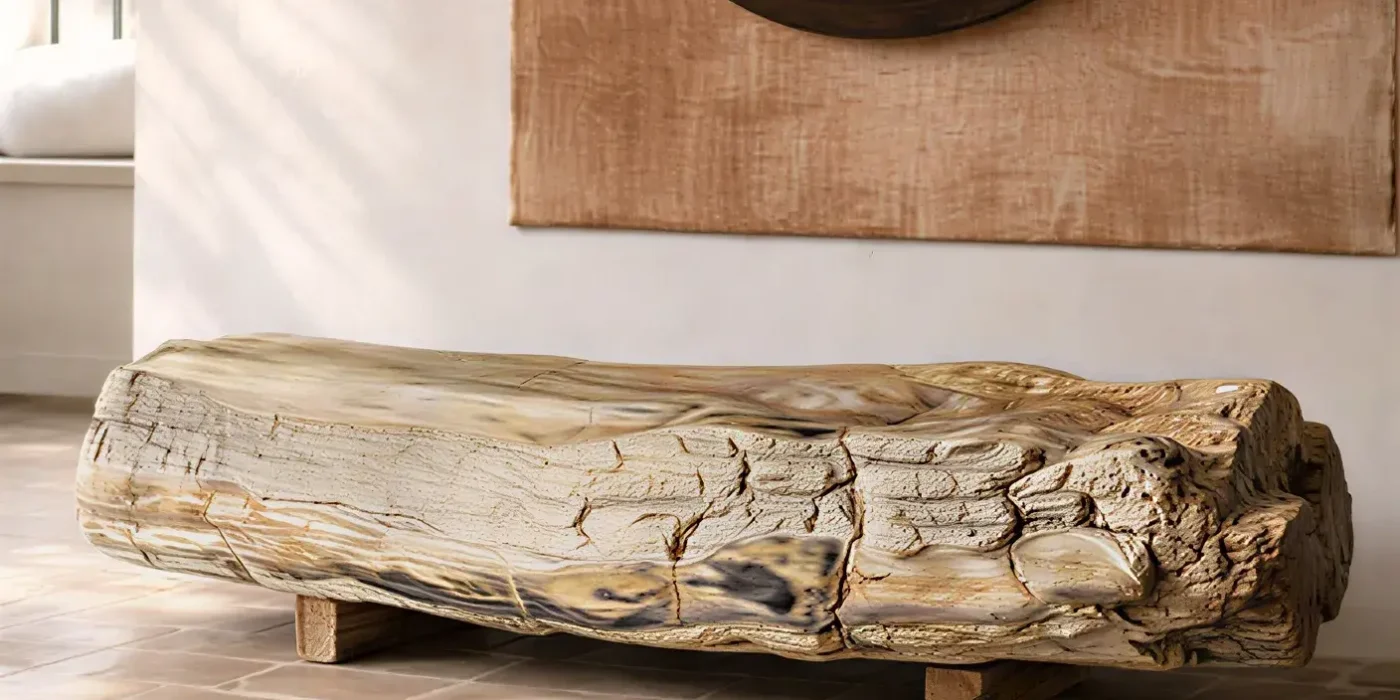
Terraces and Gardens: Pieces of petrified tree trunks, cut and polished on the top surface while maintaining their natural organic form on the sides, are perfect as stools or side tables in outdoor areas. These designs are highly sought after in the global market, especially in petrified wood furniture Bali export, where craftsmanship meets timeless material.
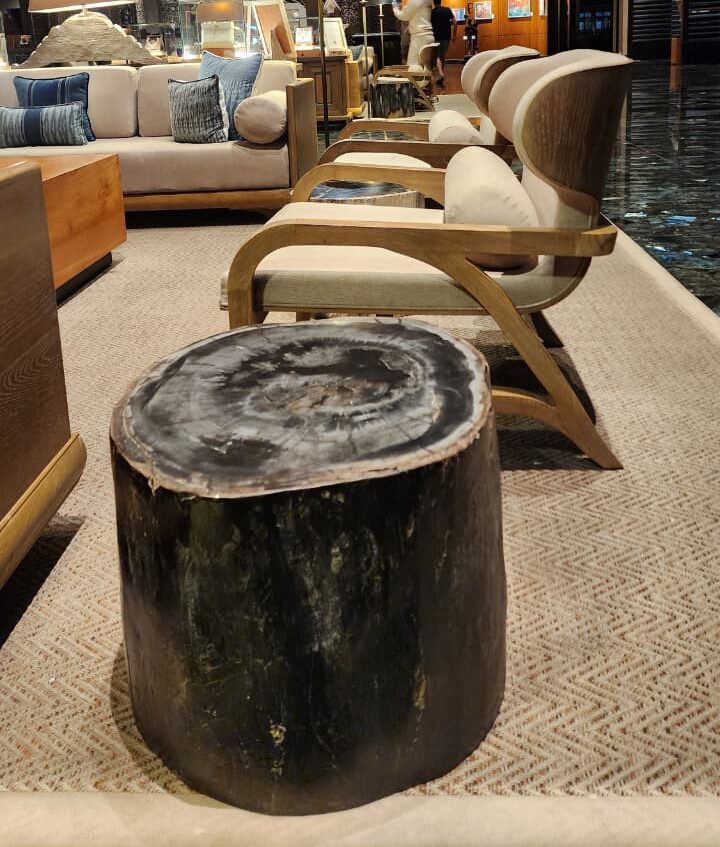
Photo Caption: Petrified Wood Stool on the Patio – Weather-Resistant, Always Classy.
Ergonomic Note: Provides stable and heavy seating (won’t shift easily) and offers absolute resistance to external weather conditions (heat, rain, humidity), making it ideal for long-term outdoor use.
Petrified Wood is an exceptional material choice for those seeking the perfect balance between functional durability (ergonomics) and authentic, luxurious aesthetics. As part of the premium petrified wood furniture Bali export industry, this material represents both natural heritage and high-end craftsmanship from Indonesia.
Every user will have a unique experience; the soft touch of the polished surface contrasts beautifully with the material’s age and inherent roughness. With Indonesian petrified wood, you are not just acquiring furniture or decor, but also bringing a piece of nature’s artwork millions of years in the making into your space, enriching it with both story and stability.