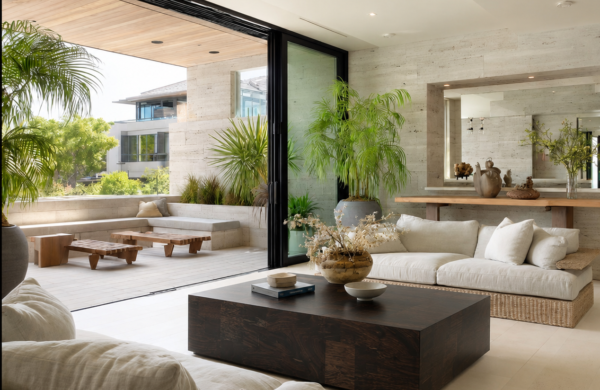

The Petrified Wooden Stool for Interior many of you are just looking at one function. But this stool has many purpose and multirole design for your interior. Over millions of years, organic wood undergoes a process called permineralization, where minerals like quartz and silica replace the cellular structure, turning ancient trees into solid stone.

Read More: What is Stool for Dining Room Interior: Here are 3 Functions
In the world of interior design, the petrified wood stool has often been pigeonholed as a mere decorative accent or a static side table. However, this ancient wonder is a powerhouse of versatility. It effortlessly transitions from a sculptural side table into a perfectly functional stool, offering a unique blend of prehistoric soul and modern utility.
Here are 5 advantages of integrating a petrified wood stool into your interior.
1. Unmatched Durability and Longevity
Unlike traditional hardwood furniture that can warp, scratch, or suffer from pest damage, petrified wood is essentially stone. On the Mohs scale of mineral hardness, petrified wood often ranks between 6.5 and 7—similar to quartz.
This makes it an ideal functional stool. It can withstand significant weight without the risk of structural failure. Whether you use it as a daily seat in a dressing room or a step stool to reach a high shelf, it is virtually indestructible. Investing in one means owning a piece of furniture that will literally last for generations without losing its luster.
2. Multi-Functional “Hybrid” Design
The beauty of the petrified wood stool lies in its multirole capabilities. Its flat, polished top provides the perfect surface for a variety of needs:
-
As a Side Table: It holds coffee books, cocktails, or lamps with steady grace.
-
As a Stool: Its weight ensures it won’t tip over, providing a solid, grounding seat for guests.
-
As Bathroom Decor: Because it is stone, it is naturally waterproof. It excels as a shower stool or a place to set towels in a high-humidity spa environment.
3. A Natural Masterpiece of Texture and Color
No two petrified wood stool are identical. Depending on the mineral content during the fossilization process, you might see swirls of iron reds, manganese blacks, or carbon blues.
When used as a stool in a minimalist or modern interior, it acts as a “living” organic element that breaks up the monotony of synthetic materials. The contrast between a polished, glass-like top and the raw, rugged exterior bark creates a tactile experience that invites people to touch and engage with the piece.
4. Space-Efficient Statement Piece
In modern urban living, furniture must earn its keep. A petrified wooden stool has a compact footprint but a massive visual impact. Because it doesn’t have legs or “negative space” underneath like a standard chair, it feels like a solid sculptural monolith.
It can be tucked away under a console table when not in use and pulled out as extra seating during a gathering. It provides the utility of a chair without the visual clutter of backrests and armrests, making your room feel more open and curated.
5. Sustainability and Eco-Consciousness
For the environmentally-minded decorator, petrified wood is an ethical choice. It is a naturally occurring fossil harvested from the earth, requiring no new trees to be felled and no toxic glues or resins to be manufactured. By choosing a petrified stool, you are repurposing a natural relic that has existed for epochs, bringing a sense of “slow design” into a world of fast furniture. However there are many things about sustainability not only for calmness of interior but also for eco-friendly nature.
1. Unmatched Durability and Longevity
Unlike traditional hardwood furniture that can warp, scratch, or suffer from pest damage, petrified wood is essentially stone. On the Mohs scale of mineral hardness, petrified wood often ranks between 6.5 and 7—similar to quartz.
This makes it an ideal functional stool. It can withstand significant weight without the risk of structural failure. Whether you use it as a daily seat in a dressing room or a step stool to reach a high shelf, it is virtually indestructible. Investing in one means owning a piece of furniture that will literally last for generations without losing its luster.
2. Multi-Functional “Hybrid” Design
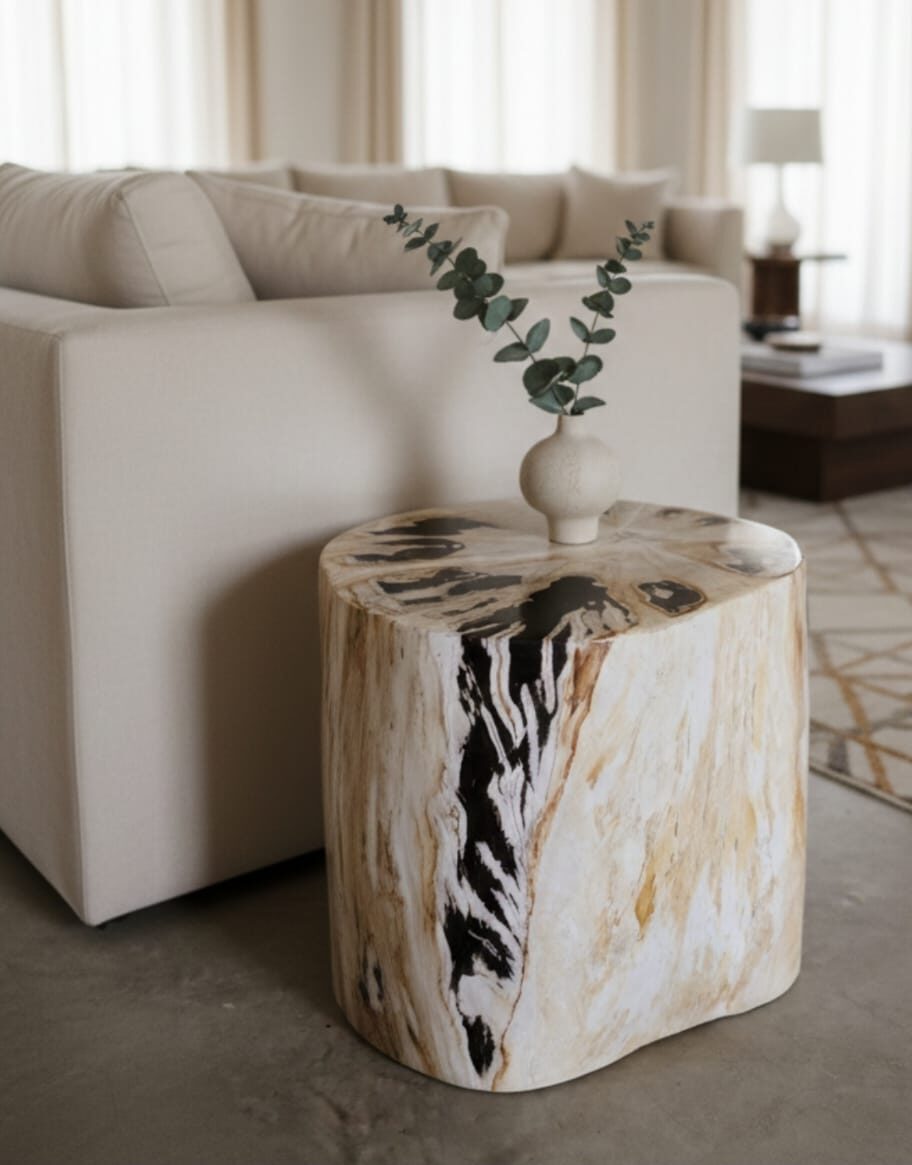
The beauty of the petrified wooden stool lies in its multirole capabilities. Its flat, polished top provides the perfect surface for a variety of needs:
-
As a Side Table: It holds coffee books, cocktails, or lamps with steady grace.
-
As a Stool: Its weight ensures it won’t tip over, providing a solid, grounding seat for guests.
-
As Bathroom Decor: Because it is stone, it is naturally waterproof. It excels as a shower stool or a place to set towels in a high-humidity spa environment.
3. A Natural Masterpiece of Texture and Color
No two petrified wooden stools are identical. Depending on the mineral content during the fossilization process, you might see swirls of iron reds, manganese blacks, or carbon blues.
When used as a stool in a minimalist or modern interior, it acts as a “living” organic element that breaks up the monotony of synthetic materials. The contrast between a polished, glass-like top and the raw, rugged exterior bark creates a tactile experience that invites people to touch and engage with the piece.
4. Space-Efficient Statement Piece
In modern urban living, furniture must earn its keep. A petrified wooden stool has a compact footprint but a massive visual impact. Because it doesn’t have legs or “negative space” underneath like a standard chair, it feels like a solid sculptural monolith.
It can be tucked away under a console table when not in use and pulled out as extra seating during a gathering. It provides the utility of a chair without the visual clutter of backrests and armrests, making your room feel more open and curated.
5. Sustainability and Eco-Consciousness
For the environmentally-minded decorator, petrified wood is an ethical choice. It is a naturally occurring fossil harvested from the earth, requiring no new trees to be felled and no toxic glues or resins to be manufactured. By choosing a petrified stool, you are repurposing a natural relic that has existed for epochs, bringing a sense of “slow design” into a world of fast furniture.